Medium
Responses Redesign
A reimagined commenting system: empowering readers and writers to engage in meaningful discourse.
Lead Product Designer
Design partner, Product Manager, Head of Product
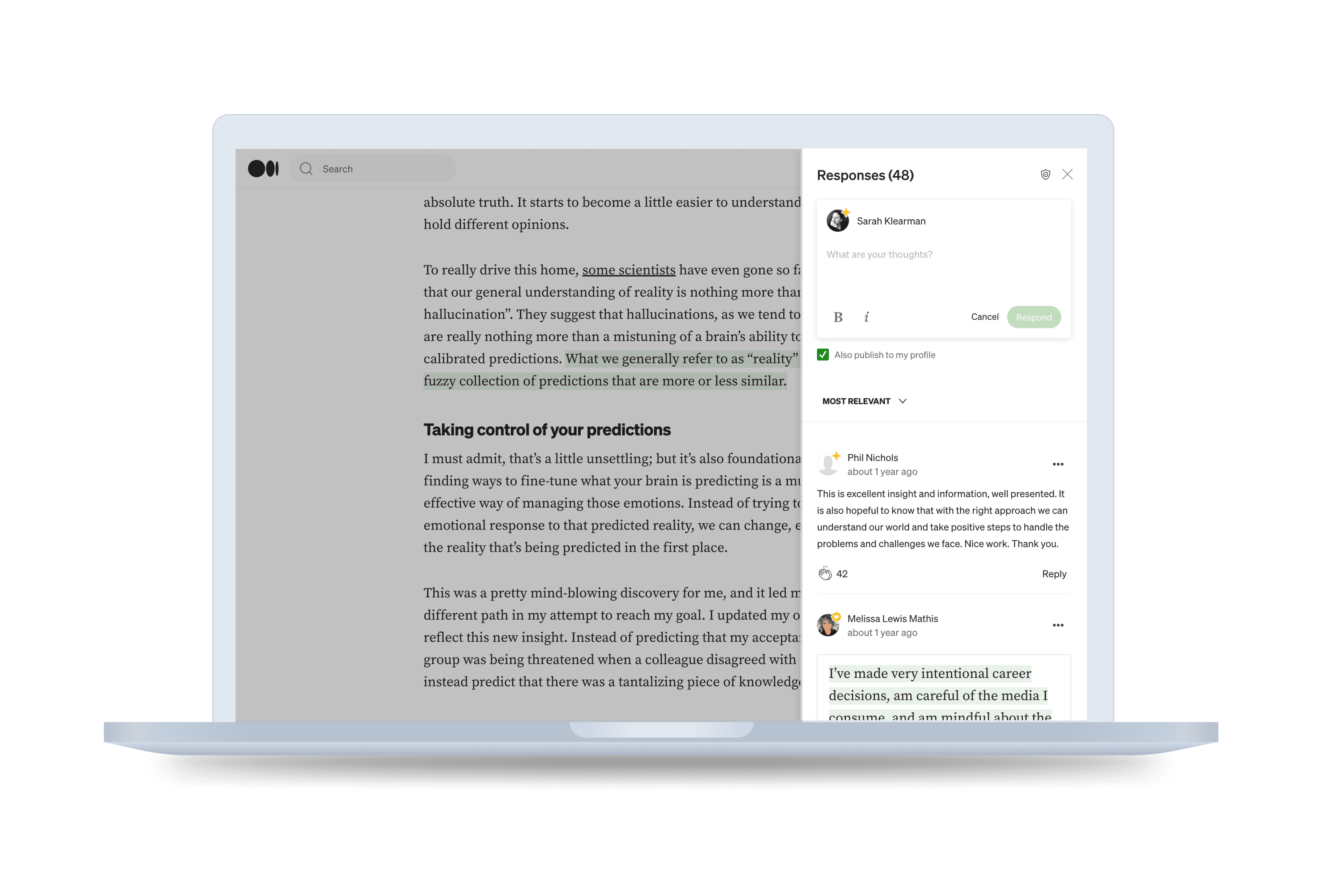
Previous Responses
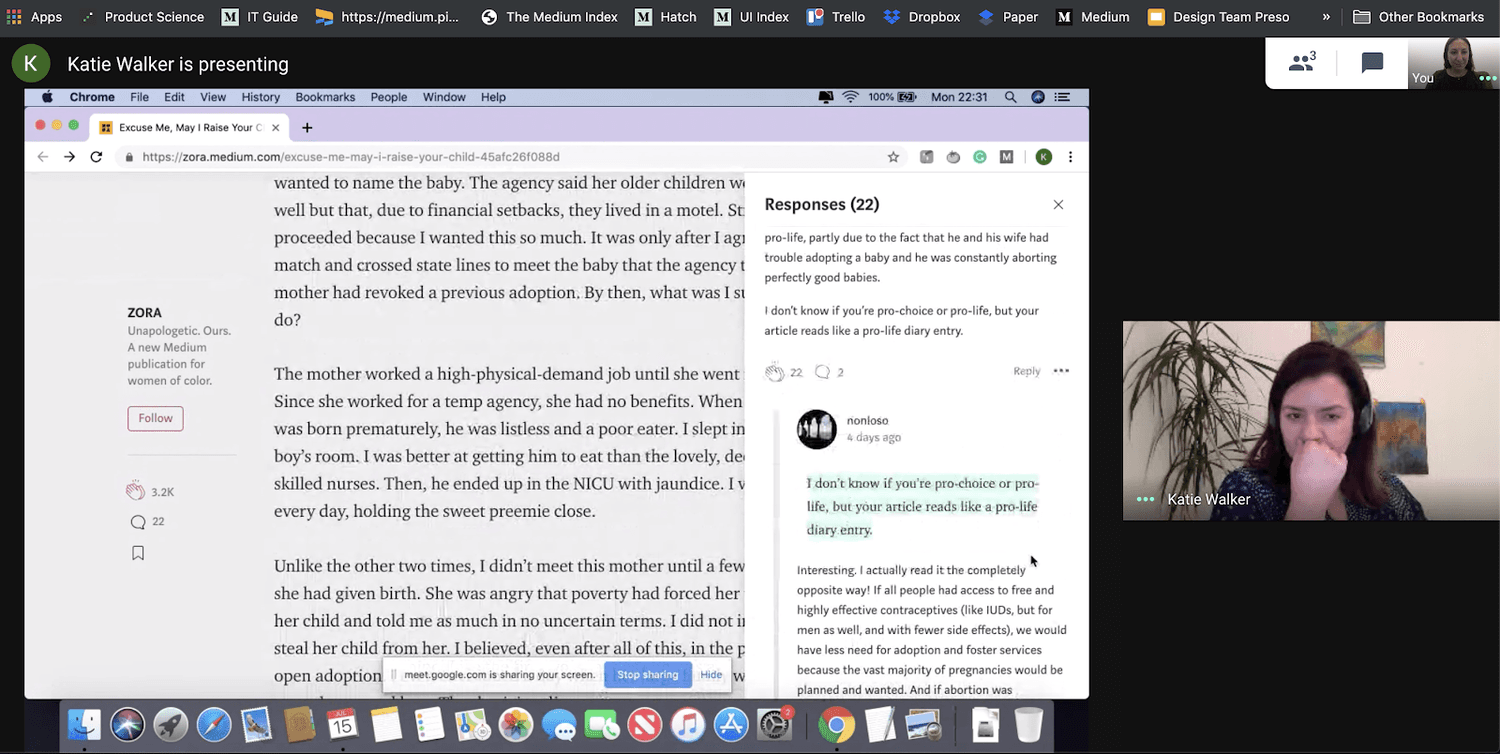
Following discussions and reading was challenging as the reader is brought to a different page each time. It's difficult to remember where you are or maintain a sense of context.
Why?
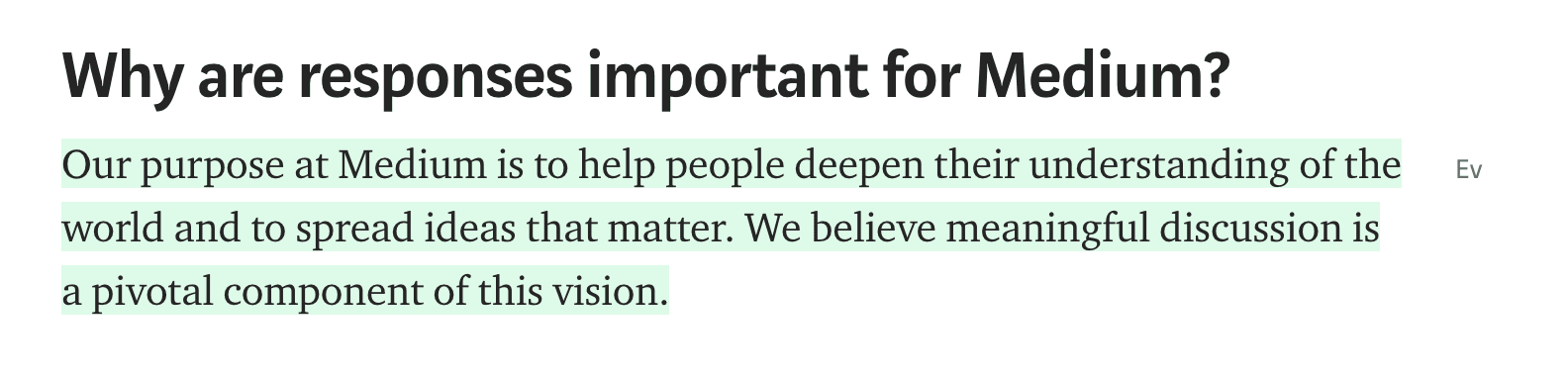
In order to make a clear case for dedicating resources to the redesign, I wrote a statement to illustrate how Responses contribute to Medium's mission.
Research
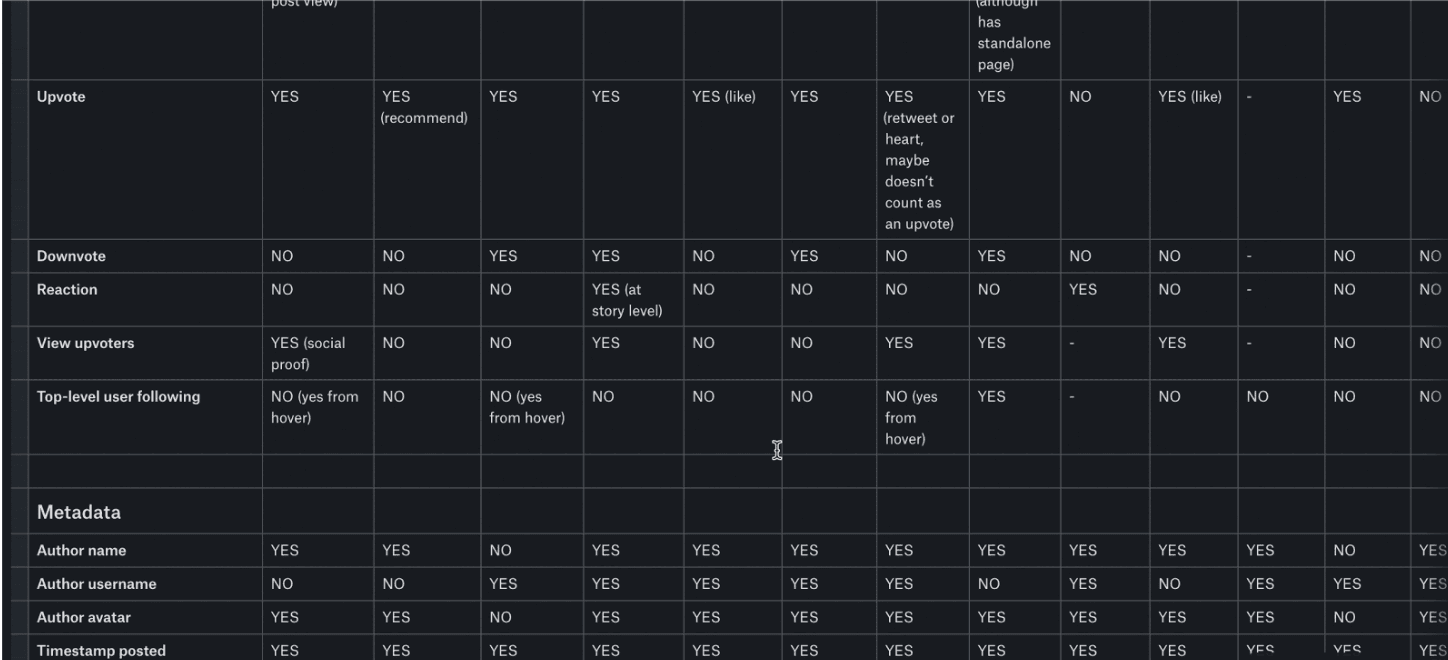
Competitive Analysis
We evaluated 12 products across 50 different attributes including reactions, filtering/sorting, nesting, community rules, and publish behavior.
User Testing and Interviews
We created a Google plugin for our prototype and interviewed 20 users in total, both readers and writers. The readers we interviewed fell into 3 cohorts: those who responded frequently, sometimes, and never. The writers varied from top-tier commissioned writers to emerging across a wide topic range.
User Feedback
- Current UX deters writers from engaging with readers
- Many readers said that responses were often more valuable than the story itself
- Writers value the interactions that indicate a reader has really read their words
- Readers said they were motivated to read responses to get a pulse on how others feel about a topic
- Side panel prototype made reading more fun and engaging
Design Principles
Context
Responses are tied to a story. Consuming and interacting with them should feel like part of the experience, not disjointed.
Thoughtfulness
The responses ecosystem should encourage thoughtful discussion and elevate reactions that add value when and where possible.
Safety
Engaging with responses should feel safe and welcoming. Users should trust that Medium has created a safe space with tools to support them.
Side Panel & Threading
The side panel helps readers maintain context while responding. Threading makes it easy and simple to follow and contribute to discussion.
Discussion Module
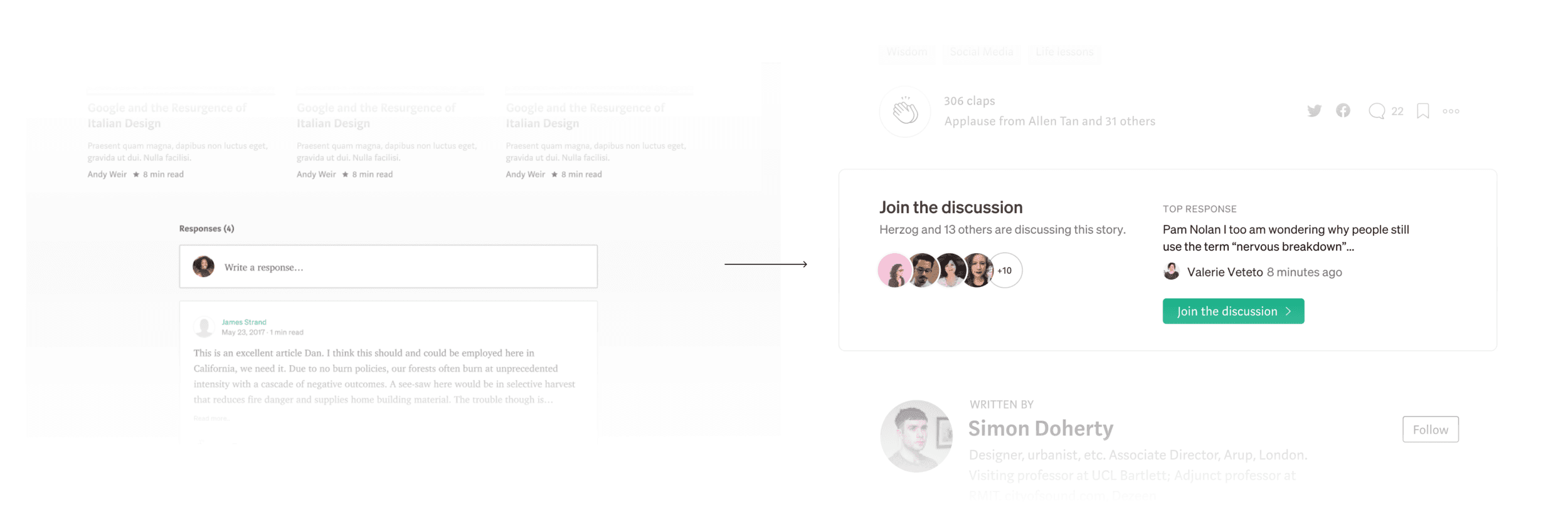
Previously, the CTA for responses was the text field itself. Though it was easy to jump right in and respond, we found that presenting the responses as a discussion from the onset was more enticing. The discussion module sets the stage for thoughtfulness, serving as a call to action. Users are encouraged to participate with a network of individuals.
Story Responses
While many users said that the 'response as a story' model didn't work for them, some found it valuable when they wanted to write a thorough response that they could publish and share. In addition to this expansion feature offering more writing room, users can explicitly choose to publish as a response.
Safety & Community
The updated panel design and easy reply feature makes responding more frictionless. But not all responses are created equally. We consistently heard in user interviews that people were hesitant to engage with responses because of spam, bad actors, and disrespectful behavior. That's why we decided to present access to our community guidelines at the top of the text field.
Pinning
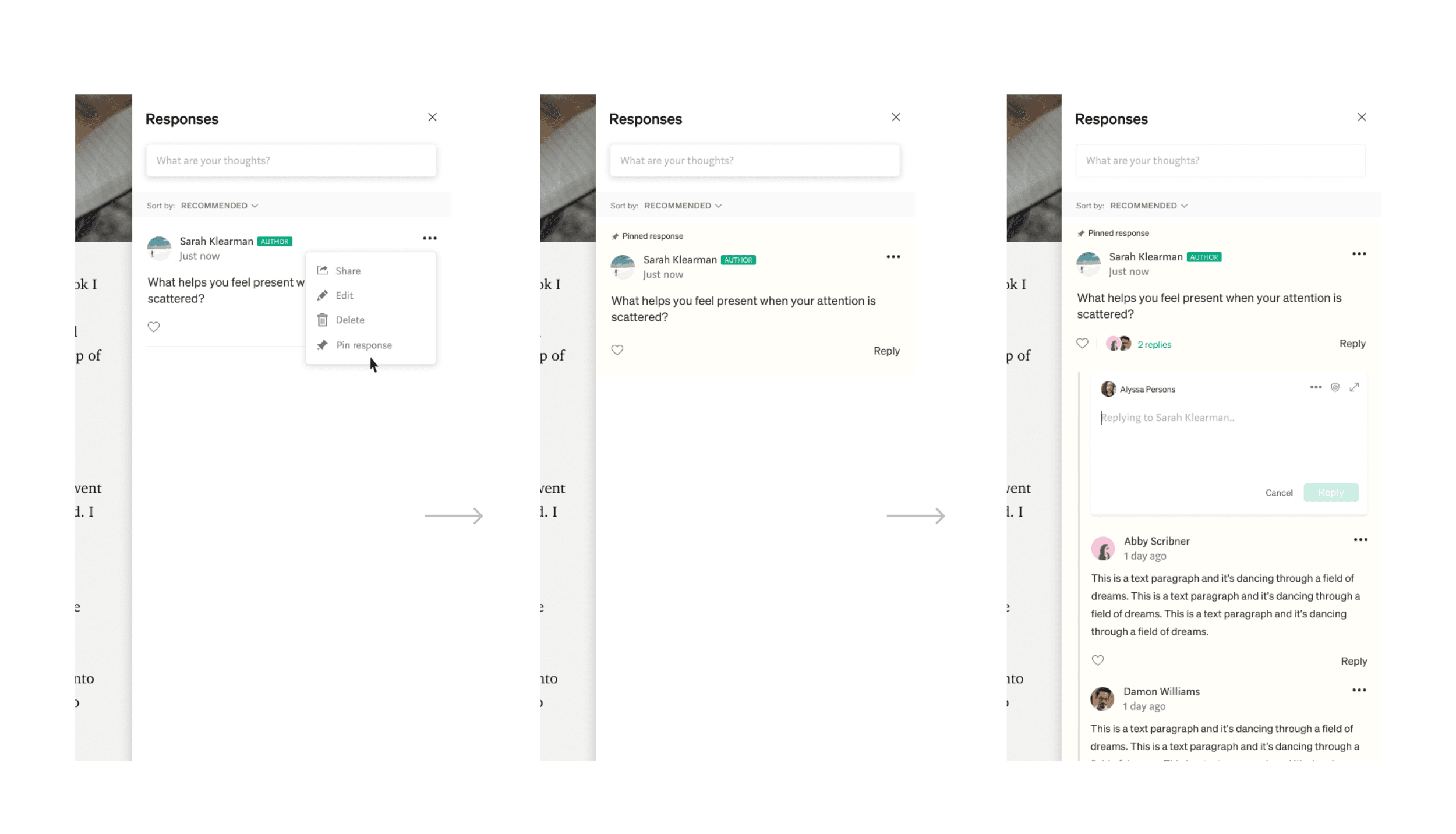
This feature spawned from a writer need: How might I guide thoughtful discussion? Writers can use pinning as a prompt for readers to respond. Pinning is also a great way to highlight reader responses that add value to their story. These pinned responses can surface in the Discussion Module.
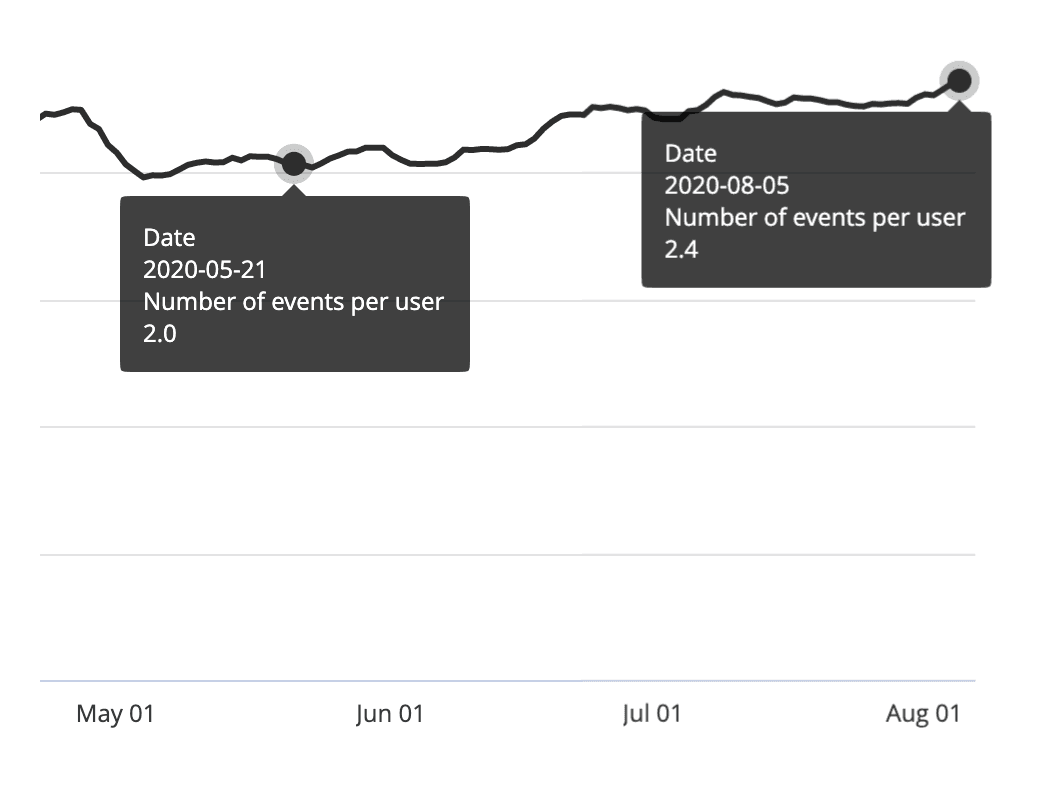
Impact